Share


Artificial intelligence (AI) has been variously posited, in academic circles and literature, to potentially both enhance or diminish the equality of global visual outcomes.1
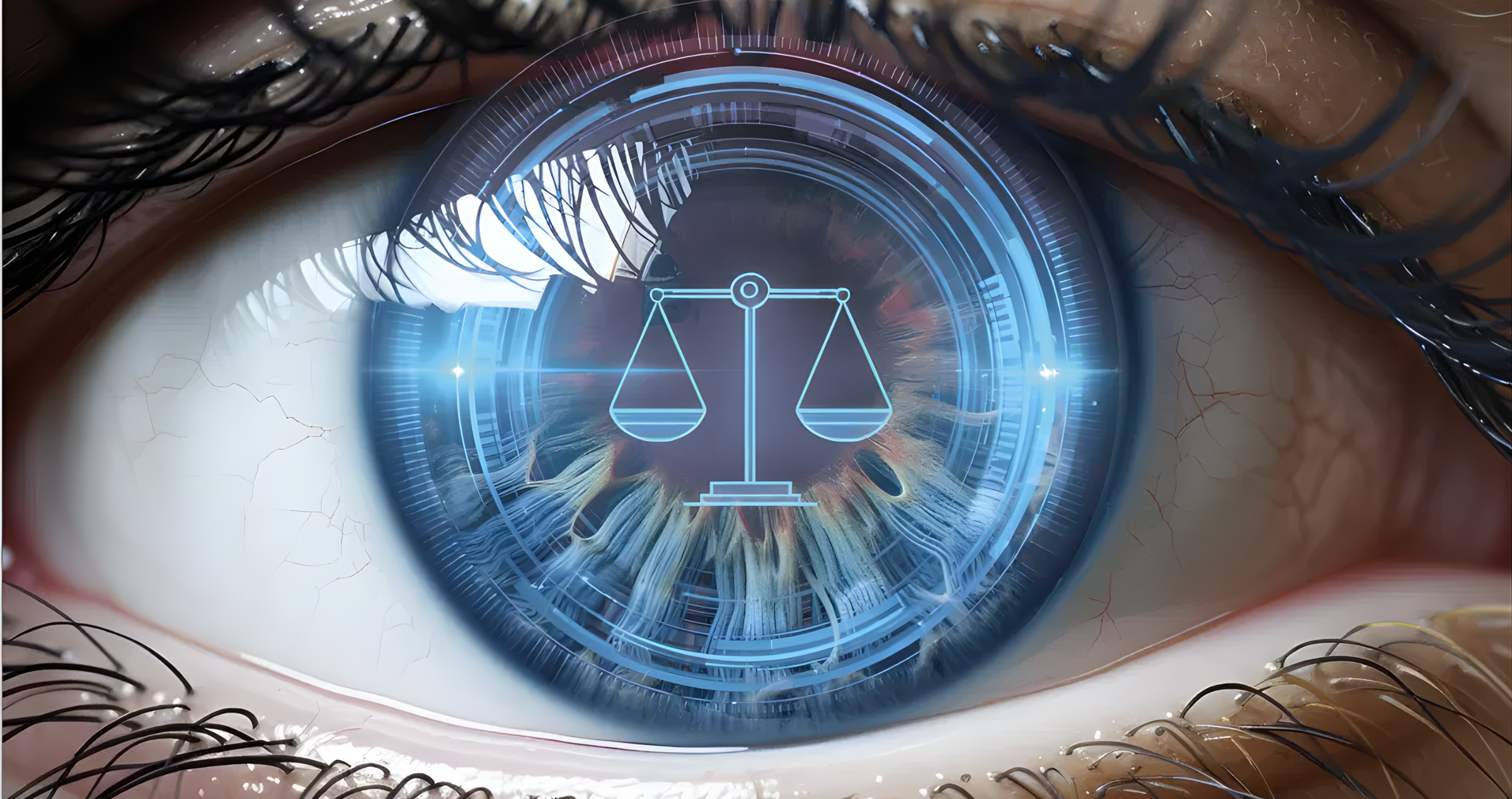
In this article, Andrew Christiansen discusses AI advancements in the ocular health professions; the relationship to the bioethical principle of ‘justice’, and how this could apply to the ideal of global equality for visual health.
Recent rapid advancements of emerging technologies in the health professions have ignited global discussion on the potential impacts these may have on the ethical frameworks each profession has been built upon.
The demand for eye health services is increasing alongside the increasing global population age. Leading causes of visual impairment worldwide include cataracts, age-related macular degeneration (AMD), diabetic retinopathy, glaucoma, and uncorrected refractive errors.1,2
One emerging technology – artificial intelligence (AI) – has experienced exponential growth in diagnostic capabilities, and appears destined to be part of standard health examinations in the very near future. Eye care professions are likely to be among those most impacted.
Inequalities in Global Health and Eye care
Existing global inequalities in health outcomes have long been researched and publicised. Countless efforts and many billions of dollars have been spent on health programs by governments and organisations around the world in attempts to reduce disparities including child morbidity rates, nutrition levels, communicable diseases, and access to tertiary care, to name a few. The underlying ethical concept driving these attempts toward equality is one of justice.
Globally, it is estimated that over 2.2 billion people suffer from a visual impairment or blindness.3 Low- and middle- income countries (LMICs) represent approximately 90% of these cases.1,3,4
Studies also show that females, in general, have disproportionately poorer visual outcomes around the world.5,6 Reasons for gender inequality are thought to be partially due to the fact that women live longer than men, although socio-cultural barriers are also likely to have a major influence.6
These inequities exist despite the admirable concerted efforts of agencies such as the World Health Organization (WHO), the International Agency for the Prevention of Blindness (IAPB), and The Fred Hollows Foundation.6
One of the major contributing reasons for these discrepancies is the lack of trained eye care practitioners and ophthalmologists operating in LMICs. Access to adequate refractive error correction is also a major problem for LMICs, with a marked difference in availability and quality between countries. Cataract surgery and the dispensing of spectacles are among the most cost-effective interventions currently available to improve visual outcomes.2
A systematic review by Bourne et al. highlighted that the correction of refractive error is the safest and most economical way to improve the visual quality of most individuals affected by visual impairment worldwide.5
This review also reported on a 2024 WHO study that included refractive error correction coverage for populations and revealed marked differences between countries ranging from 84% coverage in high-income countries down to 28.3% in sub-Saharan Africa.5
Health and Big Business
Healthcare systems are often under the control of those whose priorities are at odds with those of the patients they exist to serve.7 The underlying technological, financial, and legal systems necessarily incorporated into healthcare systems are often, despite best intentions, driven by profit motives that may not align with the health needs of the populations they are created to assist and provide for.7
Evidently healthcare needs the financial and structural support of business initiatives. On the surface, business also could not exist without the health and wellbeing of the society it operates in, and may depend on, to supply its workforce. However, increasingly, international healthcare companies appear to be acquiring smaller businesses with the likelihood that healthcare providers, particularly in LMICs, are owned and operated by offshore parent companies – often directed by boards located in wealthier nations.
This is also true of large multinational eye care companies. With the nascent but rapidly emerging field of AI, such companies will need to critically examine their ethical policies as they relate to the training, costs, and deployment of their new equipment in more underserved societies.
Through the use of AI, eye care businesses globally have the opportunity to reduce the burden of disease, increase productivity, and improve education outcomes.1 Unfortunately, there is also a risk of causing an increase in disparate outcomes and inequalities.
‘Justice’ as a Health Ideal
Justice, along with beneficence, non-maleficence, and autonomy, is one of the four main bioethical health principles outlined in the 1979 seminal work of Beauchamp and Childress.8 Justice can be viewed threefold; that of distributive justice – ensuring fair distribution of resources; rights-based justice – respecting the rights of patients; and legal justice – being accountable for one’s actions or inactions and respecting morally acceptable laws.8
How then, can justice in health outcomes be globally realised within a vastly discrepant framework of cultures, values, and economic wealth? It would seem an extremely improbable goal to attain, although many scholars and organisations are researching and working on concepts and programs to achieve such an unlikely ideal.
Business motivations, however, are not typically hamstrung by such concerns of justice, with their only requirements to satisfy the legal regulatory obligations of the space within which they operate (in conjunction with their shareholder responsibilities, of course).
Not-for-profit organisations play an enormous role around the world and have undoubtedly saved countless lives, significantly increased quality-of-life outcomes, and improved the vision of millions of people.
Evidently, though, societies and countries, in particular LMICs, cannot solely rely on foreign aid or government interventions to improve the health outcomes of their citizens. Nor should they. Businesses based or operating in such areas should practise appropriate levels of social responsibility; the extent of which should probably be commensurate with their size and level of profitability. It would be difficult to argue that government taxation revenues generated from large-scale business operations in an LMIC are enough to fulfil community ethical obligations, as undoubtedly numerous cost-saving loopholes exist for businesses to exploit.
Most – if not all – global companies have charity arms or initiatives. While this is commendable and should be encouraged, are they doing enough to contribute their ‘share’ in reducing global health disparities? Or is it unfair to suggest that businesses be accountable for health justice ideals in a world that evidently operates on the principles of capitalism? It all depends on how wealth is measured.
AI and Eye Care for All
Investing in eye care is extremely beneficial, not just for the short-term health and wellbeing of populations but for financial gains, economic stability, and independence as well. Recently, a report entitled ‘The value of vision’ was jointly released by the Seva Foundation, The Fred Hollows Foundation, and the IAPB.9 The report highlighted the burdens of avoidable blindness, outlined strategies to combat this global issue, and gave some cost-saving projections.9 The suggested roadmap (a 116 page document accessible online at: visionatlas.iapb.org/news/the-value-of-vision-the-case-for-investing-in-eye-health), proposes that every one American dollar invested in improving eye health in LMICs could yield a US$28 return.9
How can AI help? Proponents of AI claim it will bridge gaps in care delivery and access, and improve healthcare quality.7 On the surface, it does appear that AI could be a significant game changer in providing solutions to existing global health inequities, including in eye care. Many AI-driven ophthalmic instruments are already in use, and are able to provide the user with reliable diagnostic information on conditions such as diabetic retinopathy, glaucoma and AMD.
AI has the ability to clinically assist a much wider population in a shorter timeframe than more traditional methods could achieve.Underserved populations stand to benefit the most. If, that is, AI is deployed in an ethical manner with true intentions of seeking justice for the communities it acts to serve.
An Australian study by Frost surveyed public perceptions on AI’s ability to impact standards of healthcare. While the public was supportive, in general there were also a few concerns.10 Common to some other studies, one of the main concerns was the need to keep a human in the loop so decisions are shared with the AI program, and the ability to override a decision is retained.10 However, even a human in the loop does not guarantee a better diagnostic outcome – clinicians may end up putting more faith in an imperfect AI tool than their own judgement, potentially causing more patient harm than good.11
Resource-poor communities may not end up benefitting long-term from AI. According to Morley, at present, AI is “…exacerbating the digital divide, not reducing it”.12 There are numerous reasons supporting this opinion. Regulatory barriers, cybersecurity concerns, and resource limitations in LMICs are major obstacles to effective AI implementation.1 Convincing governments that AI models are safe and effective for deployment in conjunction with the financial outlays required for the necessary infrastructure are significant hurdles.1 Ethically, algorithmic bias could potentially perpetuate inequalities as marginalised groups are often under-represented in training datasets.1
Ultimately, any improvement in equality in health and eye care outcomes will be due to the combined efforts and decisions of individual practitioners and truly globally-encompassing programs. Government backing should and does occur, albeit likely dependent on political agendas. Increased business support could significantly and positively impact underserved communities.
Many technologies and methodologies have, and are, being utilised in attempt to reduce health inequalities and deliver justice to less fortunate communities. AI is just the newest tool we have. We need to use it wisely and justly, or risk increasing the existing health and wealth divide.
Andrew Christiansen BAppScOpt MPhil MHSc PGCertOcTher is an experienced optometrist and owner of the Optical Superstore in Bundaberg, Queensland. He is a PhD candidate in Ethics and Optometry at the Queensland University of Technology.
Mr Christiansen is a Board Director and the Ethics Committee Chair of Optometry Queensland and Northern Territory (OQNT). The views expressed in this article are his own, and do not necessarily reflect those of OQNT.
This article has been republished courtesy of mivision.

After four decades of glaucoma and many treatments, Denise has stayed positive, but changes to her sight have made the emotional side of the condition harder. Her advice is to be proactive and find a doctor you trust.

Paul went for an eye test because he couldn’t see the ball on the squash court, expecting a pair of glasses. Instead, he was diagnosed with glaucoma at 44.

In paediatric eye care, urgency is determined not only by disease severity, but by the narrowing window for visual development. From recognising red flags and referring promptly, to providing ongoing refractive and low-vision care, optometrists play...